
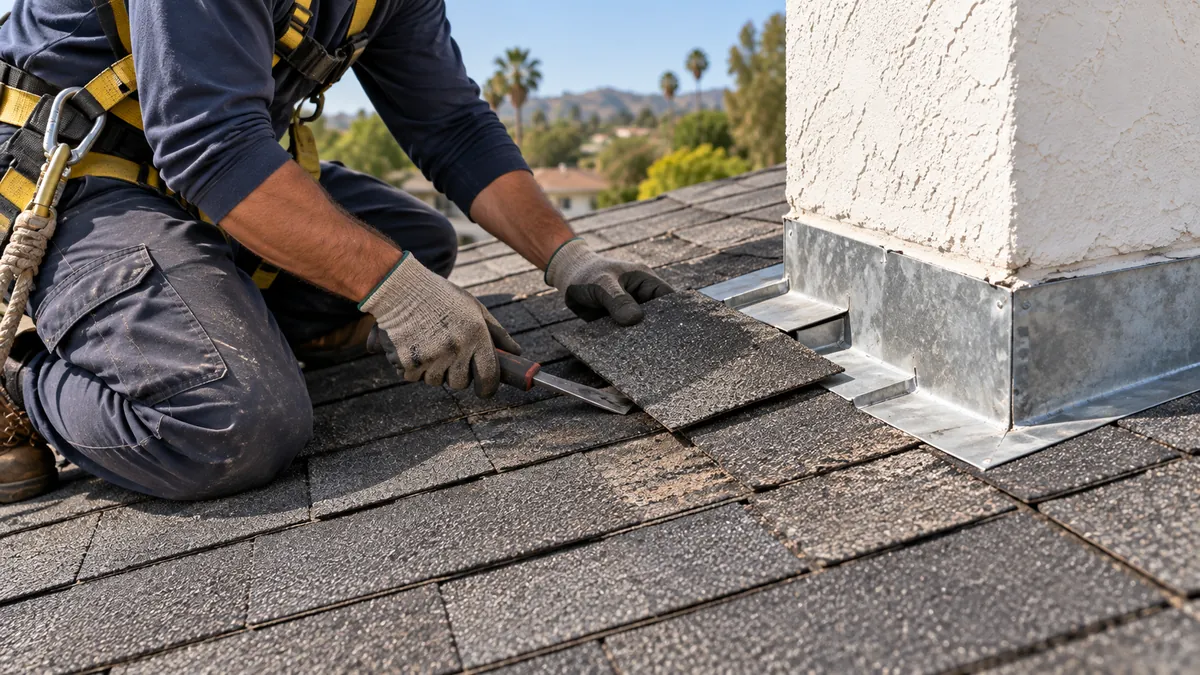
The stain and the entry point may be in different places
Water can travel along the roof assembly before it shows up indoors. That is why patching directly above a stain may miss the actual problem. Useful information includes whether the leak occurs during wind-driven rain, after long rainfall, or near a particular chimney, vent, skylight, or wall.
Tell us if the problem has been repaired before. An old patch can offer clues, but it can also cover the detail that needs to be examined. A repair recommendation should explain the suspected entry point and the part of the roof it will address.
Match the repair to the roofing system
Damaged shingles, cracked tiles, loose flashing, and low-slope membrane problems require different approaches. Applying the same surface product to every leak can leave the underlying cause in place. Ask which materials will be used and how they will connect to the existing roof.
With tile, the visible tile may be only part of the problem. With a low-slope roof, seams, penetrations, and drainage deserve attention. A small repair still needs a defined boundary and a clear explanation of what the work can reasonably accomplish.
- Missing or damaged shingles
- Broken tiles and exposed roof details
- Pipe, vent, skylight, and chimney flashing concerns
- Low-slope seams and drainage-related leaks
- Repeat leaks around previously repaired areas
Know what a repair can and cannot solve
It is fair to ask whether a repair will address one isolated defect or simply buy time on a roof with wider wear. Both can be useful choices if the limits are clear. What would make the repair a poor investment? Which other areas are showing similar problems? What would change the recommendation to replacement?
A useful written scope identifies the work area, the proposed repair, related exclusions, and any conditions that could change the price. If deck damage is found after materials are opened, agree on the documentation and approval process before work expands.
If water is coming in now
Keep people away from a sagging ceiling, wet electrical fixtures, or any area that appears unstable. Do not climb onto a wet roof to inspect the problem. Move possessions only when it is safe and take photos from inside or from the ground. Roof work and temporary protection depend on safe access and weather conditions.
Call (747) 946-7850 and say that the leak is active. Describe the affected room and whether the water is near electrical equipment. Ask about current availability; a request for urgent help should not be mistaken for a confirmed appointment.
Repair decisions for North Hollywood properties
A home, duplex, apartment building, and detached garage may each have a different roof assembly and access plan. Let us know who owns or manages the property and which parts of the building are affected. EverStrong Roofing serves North Hollywood and nearby Valley communities. Request a repair estimate with your address and a short description of the issue so the conversation starts with the details that matter.
Questions about roof repair
Does every roof leak mean I need a new roof?
No. A leak may come from a specific damaged detail or a broader roof problem. The condition and extent of the damage should guide the choice. Ask for the findings behind any replacement recommendation and whether a defined repair is a reasonable option.
Can a leaking tile roof be repaired without replacing all the tiles?
Sometimes. Work may involve a local area, flashing, or underlayment beneath the tiles. Tile condition, access, breakage risk, and the extent of the issue affect the approach. The repair scope should explain which tiles will be lifted and what will be replaced below them.
What should I send when asking about a leak?
Share the property address, a callback number, the roof type if known, and when the leak occurs. Safely taken photos and details of earlier repairs can help. Do not climb onto the roof or enter an unsafe attic to collect information.